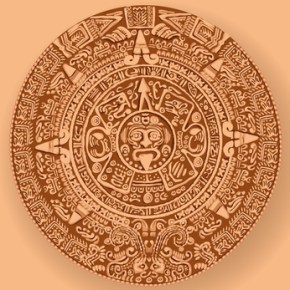
The Mayan calendar pushes us to define “the end of the world” as we know it

© olgachirkova - Fotolia.comBy now, you’ve probably heard that the world is scheduled to end on December 21, 2012 according to an ancient Mayan calendar that’s stirring up a whole lot of panic.

Despite expert proclamations that the world will NOT end this month (including one from NASA), there’s a growing movement of “preppers” actively preparing for the end of the world as we know it (personally, I’m preparing to hear a whole lot of R.E.M.)

So why is the Mayan calendar’s 12/21 end date causing such a ruckus across the globe, while Yucatán is busy organizing a Mayan cultural festival that runs till 12/22? Well, the Mayan calendar prediction is just so darn specific. Usually doomsday predictions are more along the lines of “when evil triumphs over good” — which is left open to quite a bit of interpretation. It’s a whole lot easier to get riled up over a particular date.

But why are people preparing for the end of the world if, you know, the world will cease to exist and it won’t matter how many Twinkies and gas masks you stockpiled? Well, it has to do with how you define the end of the world. Eschatology (basically, the study of the end of the world) is defined in the Oxford English Dictionary as “the part of theology concerned with death, judgement, and the final destiny of the soul and of humankind” — and how you view these  events depends a great deal on your religious and/or cultural background.

It seems to me there are three main definitions of the “end of the world” that affect your decision to prepare, or not to prepare: 1.) A cataclysmic event (maybe a meteor?) that causes a period of drawn-out chaos before life ceases to exist on earth; 2.) An event (perhaps a battle between good and evil) that will mark the end of the world and your assumption into Heaven; and 3.) A light switch-style event — the world existed, now it doesn’t. If you believe in 1 (and maybe even 2), you’re more apt to prepare for the end.

Interestingly, two of the major words we use in our language to describe the end of the world (armageddon and apocalypse) both stem from the Christian tradition. The word armageddon comes from the New Testament — it’s “the place where the kings of the earth under demonic leadership will wage war on the forces of God at the end of history.” Today, we think of it as a movie starring Ben Affleck … and a general cataclysmic event that precipitates the end of days.

But this concept of a battle between good and evil marking the end of the world is in line with Hindu and Buddhist eschatology, too — the idea that we’ll reach a state of moral decline that looks something like The Hunger Games before the whole world gets destroyed …. so a new world can be created with a blank slate. What this destruction and rebirth looks like varies across traditions, but the concepts are metaphorically very similar.

The word apocalypse also stems from a Christian end-of-world story, although we use it today to be synonymous with a world-ending cataclysmic event. Many Christians believe in a post-apocalyptic Rapture — that is, “the final assumption of Christians into heaven during the end-time according to Christian theology,” which is quite different from how Eastern religions conceptualize the end of the world.

A common thread in eschatology, however, is that the “end” is rarely all that finite.  Sure, some traditions are more pessimistic or optimistic, but there’s usually a next chapter: Heaven, a new world, or a rebirth after a battle between good and evil destroys most life on earth. We bring these hopes and fears to how we view the supposed “prediction” of the Mayan calendar. But there are scholars of Latin American civilizations who believe that the 2012 “end” date was simply the end of a cycle on one calendar — it would be marked by celebration, and another cycle would begin. In other words, the world isn’t ending on December 31, 2012 just because that’s where your calendar ends.

So while December 21, 2012 isn’t doomsday after all (because, hey, we’ve been wrong about this plenty of times before…), the Mayan calendar offers a chance for reflection. Why is it that so many people seem convinced we’ve reached the age of ultimate moral decay? What extreme weather events have transpired recently that make us fear that the end is near? And since the world isn’t ending in the next few weeks, what can we do to make sure we don’t hasten along its demise?

Learn how to insult people like Thaddeus Stevens does in ‘Lincoln’

© KarSol - Fotolia.comThe mid-1800s were a colorful time for the American language, when quick-witted historical figures like Abraham Lincoln and Mark Twain roamed the earth. As American English separated from its mother tongue across the pond, our language seemed to change and grow as rapidly as the nation’s borders were expanding and other languages were making their way onto our shores (it was also a bit saltier back then, much like the pioneers who pushed their way westward).

As a result, it turns out some pretty strange insults – many of which we still use today in one form or another – come from the mid-1800s, particularly around the time of the Civil War. (Unfortunately, some of the most racist terms stem from that time period, too…) But it wasn’t our man Abe who won the dis wars in ‘Lincoln’ – it was Thaddeus Stevens, a powerful Republican leader in the House of Representatives under Lincoln, whose wit makes “Your momma” jokes seem like child’s play.

So, with a nod to Tony Kushner’s screenplay for ‘Lincoln,’ here are a few 19th century-style insults that would be worthy of retorts like “Burn!” or “Ooh, no he didn’t!” today:

1.)    You fatuous nincompoop! (21st century version: You smug idiot!)
This is my favorite insult uttered by Thaddeus Stevens in ‘Lincoln’ – it’s spoken with so much vitriol and sarcasm, he doesn’t need to use four-letter words to convey his contempt.

2.)    Why, you ignoble scalawag! (21st century version: You good for nothing low-life!)
Today, we think of a scalawag as a rascal. But the original definition of scalawag (c. 1848) is a white Southerner acting in support of reconstruction after the Civil War, often for private gain.

3.)    Ain’t that a heap of bunkum! (21st century version: What a pile of s@#t!)
We know it as bunk today. But bunkum dates back to 1845, often attributed to a congressman’s claim that an irrelevant speech he gave was only meant for the people of Buncombe, NC.

4.)    Enough of your palaver and carpet-bagging! (21st century version: I’m tired of your corrupt bulls#@t!)
Post-Civil War, carpetbaggers were Northerners who moved to the South for private gain – but history shows that while some were corrupt, others helped rebuild the Southern economy.

5.)    “I do not believe I could learn to like her except on a raft at sea with no other provisions in sight.” – Mark Twain on Lilian Aldrich (wife of poet Thomas Bailer Aldrich)
Mark Twain seemed to be friends with the Aldriches in the late 1800s, so it’s unclear what the context of this quote is. But it is clear that Mark Twain was a master of the witty insult.

Of course, if you’re not particular about whether your insults are American or British, you can always build your own 1800s insult using handy cheat-sheets like this one.

The 2012 election was a battle to define the words that define us

© freshidea - Fotolia.comI was out of the country on November 6th this year (don’t worry, I voted by mail), which was an interesting experience. It turns out meeting people who are on the outside looking in at our election madness is a good way to get some perspective. I realized that this election season, we Americans were having a war over words.

Sure, the thick of the campaign season just felt like a cacophonous mess.  But looking back on the whole affair (which we can, now that it’s thankfully 10 days in the past), it seems clear that as a country, we were struggling to define the words that define us. It was, at times, an ugly struggle — but a meaningful one that showed us who we are and what we’re about.  It also proved that while words often evolve with the times to stay relevant in a new social context, some words are simply too powerful to be redefined.

So, lets take a look at three volatile words that, in my mind, were the most hotly contested leading up to this election season:

1.) Marriage: The definition of marriage has been shifting in this country for years now. But this year, it came to a head with marriage equality appearing on the ballot in four states. It was a historic victory for gay rights, with three states endorsing moves to allow gay marriage.  This one’s a clear win for an evolving definition of marriage. Just consider the fact that Merriam-Webster includes “being united to a person of the same sex” in its definition of marriage. Now it’s time for the Oxford English Dictionary to follow suit…

2.) American: Now, this shouldn’t be a difficult word to define. The OED says that an American is a “native or citizen of the United States” (Merriam-Webster agrees…) But for decades, politicians have tried to lay a claim on being more American than the opposition. Candidates must wear American flag lapel pins on TV, lest they be branded as un-American. President Obama saw the worst of this with the extremely disheartening Birther Movement — but it turns out, being white isn’t part of the definition for being American.

3.) Rape: For whatever reason, there were male Republican candidates this election who decided to take it upon themselves to try and redefine what constitutes rape. There was Todd Akin, who tried to come up with a definition for “legitimate rape.” And there was Richard Mourdock, who believes that sometimes, rape is just part of God’s plan (especially when it ends in pregnancy). Sorry, boys — the American electorate has spoken and your edits aren’t making it into the dictionary any time soon…

On the surface, these might seem like “just words” — but as this election has shown, words can be extremely charged and powerful. Thomas Friedman illustrates this eloquently in his op-ed about why he’s pro-life. The word has been co-opted by a religious movement and imbued with political meaning, but the reality is, the vast majority of humans respect life and are simply trying to live a good one themselves. So why all the fuss over words? Well, remember — how we define words defines us as a society.

Hurricane Sandy reminds us of the origins of Manhattan street names

© nickolae - Fotolia.comAs a Jersey girl by birth and a one-time resident of Lower Manhattan, the news of Hurricane Sandy hit me hard. Living on the west coast, it’s hard to imagine people navigating the Lower East Side by boat or entire boardwalks along the Jersey shore washed away into oblivion.

Now, as recovery begins, people are starting to ask questions. Are storms like Hurricane Sandy going to become the norm because of global warming? What was the storm trying to tell us about the places we inhabit and the way we inhabit them?

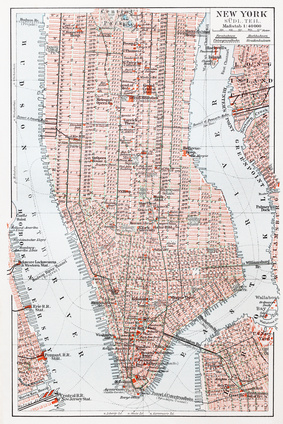
As the rivers surged and flooded into New York City, it brought to the surface an interesting fact unbeknownst to me — much of Lower Manhattan, which experienced some of the most dramatic flooding, is actually built on centuries’ worth of landfill. And with that realization, I began to understand that New York City’s downtown street names are trying to tell us something — they’re holding onto a piece of watery New York history:

The old shoreline of Manhattan was actually Pearl Street, supposedly named after all the oysters in the adjacent river. Most of the ground beyond that is landfill.

While the origins of the name Wall Street are somewhat disputed, popular accounts suggest the street was an actual wall that ran along the old shoreline (starting at Pearl).

Nearby, Canal Street is named after the actual canal that used to be there — it was dug to drain the filthy, diseased Collect Pond (which made the surrounding area even marshier).

And there’s the aptly named Water Street, which became the new shoreline of the East River when the island was extended through landfill in the 18th century.

It shows us that water has long flowed where we now build parks, condos and restaurants. — and for centuries, man has tried to keep it at bay, extending the shoreline of Manhattan. Now, it seems we’re witnessing a battle of man vs. nature as superstorms hit areas like New Jersey, which are typically known for being temperate. Mayor Bloomberg knows he has his work cut out for him if he wants to save the city we all love so much — perhaps his biggest hurdle will be convincing people, once and for all, that global warming is real.

Big Bird, Bayonets and Binders: The best debate memes of 2012

© James Steidl - Fotolia.comWho won the presidential debates of 2012, you ask? Sure, media and political analysts might be calling it 2 out of 3 wins for Barack Obama… But the real winner this year is the meme.

Put simply, a meme is “an idea, behavior or style that spreads from person to person within a culture.” The term was coined by Richard Dawkins in his 1976 book The Selfish Gene, but the word has caught on today as Internet memes spread like wildfire.

Political debates have long been known for giving birth to memorable zingers like, Lloyd Bentsen’s “Senator, you’re no Jack Kennedy” or Ronald Reagan’s “There you go again.” But in the age of Twitter, a gotcha zinger by itself just isn’t good enough. It needs to be meme-worthy — that is, easy to convert into 140-character Tweets, quippy soundbites, and animated or captioned images (my fave is the post-RNC “I’m with [picture of chair]!“) This debate season has been meme-tastic, so I thought I’d recap the best of them here:

1.) Binders full of women – When the candidates were asked during the second presidential debate how they plan to rectify gender inequality in the workplace, Romney’s answer stole the show (but not in the way he intended). He said his team brought him “binders full of women” so he could find qualified females to serve on his staff.  Oops. In about a nanosecond, the Binders Full of Women Tumblr blog and bindersfullofwomen.com had sprung up on the Web. Twitter was set ablaze, and reviews for Avery binders on Amazon would never be the same again.

2.) Horses and bayonets – During the third debate, Mitt Romney criticized Barack Obama for the Navy having fewer ships than it did in 1917. Where he was going with that, I don’t know — but the President struck back with, “we also have fewer horses and bayonets.” And with that, an Internet meme was born — the line won Obama the debate, and the phrase became an instant hit (soon after the debate, there were over 105,000 Tweets per minute about #horsesandbayonets). Just for the record, the military does still have some horses and bayonets

3.) Big Bird – Mitt Romney was on a tear during the first presidential debate, and one of his targets was PBS. Romney said that while he liked PBS, Big Bird and even debate moderator Jim Lehrer, he was going to stop the subsidy to PBS. A slew of angry Big Bird memes ensued, including an official Obama campaign ad (it later got pulled down, though, since Sesame Street is a nonpartisan nonprofit). So who won this meme war? Sorry boys, Sesame Street made out like a bandit with this one — Big Bird costumes are flying off the shelves for Halloween this year.

4.) The 1980s called – The third presidential debate was Obama’s turn to go on a tear, criticizing Romney for being stuck in the Cold War by calling Russia America’s “number one geopolitical foe.” Of course, the president said it with style and sarcasm: “The 1980s called — they’re asking for their foreign policy back.” If you ask me, this meme didn’t get the steam behind it that it deserved (Example: The 1980s called — they want to send you Trapper Keepers full of women…wearing shoulder pads.”) Still, #The1980sCalled was very much a meme of its own.

In the year of the meme, President Obama has been declared the clear winner of the Twitter war — now let’s see how that translates at the polls.